
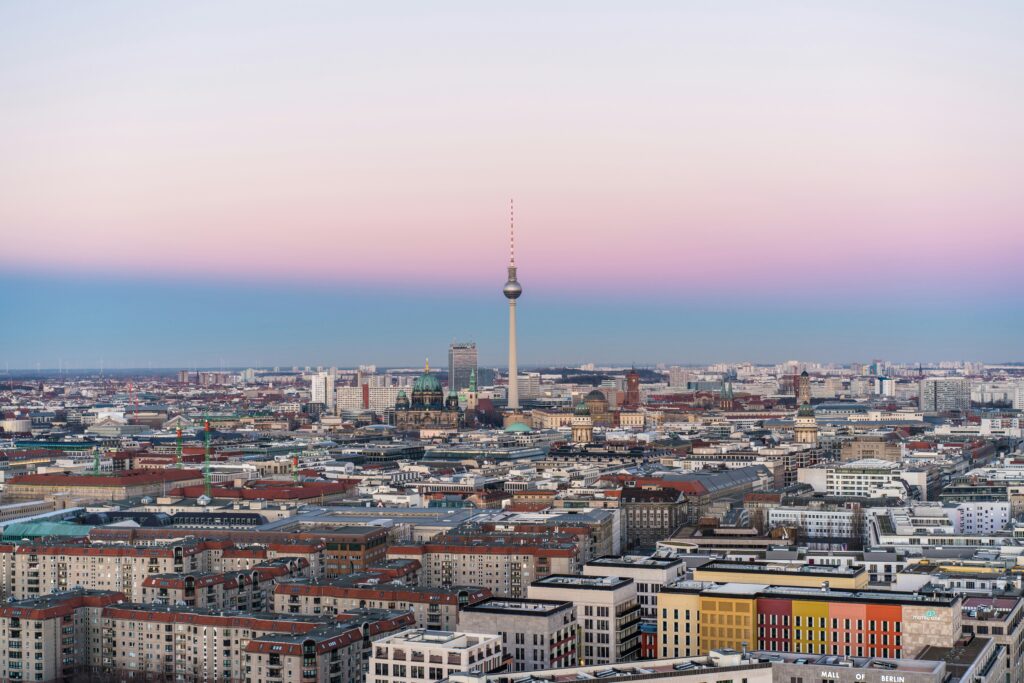
Berlin is Germany’s most affordable major city and one of Europe’s most culturally vibrant capitals. While it has lost its reputation as an ultra-cheap city — rents have roughly doubled since 2015 — it remains 30–40% cheaper than Munich or Frankfurt. A Cost of Living Index of approximately 62 (Numbeo 2024, NYC = 100), combined with Germany’s high local wages (GNI $76,180 PPP), makes it a strong choice for those earning locally.
Sources: World Bank Open Data — NY.GNP.PCAP.PP.CD (2024); Numbeo Cost of Living — Berlin 2024.
Key Data at a Glance
| Indicator | Value | Source |
|---|---|---|
| Cost of Living Index (city) | ~62.4 | Numbeo 2024 |
| Rent Index (city) | ~22.8 | Numbeo 2024 |
| Groceries Index | ~58.6 | Numbeo 2024 |
| Restaurant Index | ~60.2 | Numbeo 2024 |
| Local Purchasing Power | ~132.4 | Numbeo 2024 |
| Germany GNI/capita PPP | $76,180 | World Bank 2024 |
Housing in Berlin
| Neighbourhood | 1-bed furnished/month | Notes |
|---|---|---|
| Mitte | ~$1,600–2,200 | Central, tourist area |
| Prenzlauer Berg | ~$1,400–1,900 | Trendy, families, popular |
| Friedrichshain | ~$1,200–1,700 | Young, nightlife |
| Kreuzberg | ~$1,200–1,700 | Multicultural, creative |
| Neukölln | ~$1,000–1,500 | Up-and-coming, best value |
| Charlottenburg | ~$1,400–1,900 | Classic West Berlin |
| Lichtenberg / Marzahn | ~$800–1,200 | Eastern suburbs, cheapest |
Source: Numbeo Berlin 2024.
Food
| Category | Monthly estimate | Notes |
|---|---|---|
| Groceries (1 person) | ~$280–400 | Aldi/Lidl reduce costs significantly |
| Restaurant lunch (mid-range) | ~$14–22/meal | |
| Coffee | ~$3.5–5 | |
| Monthly food budget (moderate) | ~$420–600 |
Transport
| Transport | Monthly cost |
|---|---|
| Deutschlandticket (all regional transit) | ~€58/month (~$63) |
| Single S/U-Bahn ticket | ~$3.8 |
| Taxi (5km) | ~$15–22 |
Monthly Budget Estimates
| Budget level | Monthly estimate | Profile |
|---|---|---|
| Frugal | ~$1,600–2,200 | Outer area, Aldi groceries, transit |
| Moderate | ~$2,600–3,500 | Central 1-bed, dining occasionally |
| Comfortable | ~$4,000–5,500 | Prenzlauer Berg, active lifestyle |
Key Insight
Berlin is the best-value major capital in Western Europe for anyone earning German-level salaries. Its Local Purchasing Power Index (132.4) — the highest in this dataset — confirms that locals earn very well relative to prices. For remote workers earning in USD/EUR, Berlin offers limited price advantage over Southern Europe, but compensates with world-class infrastructure, cultural life and Germany’s legal stability. The Deutschlandticket (€58/month for all regional and national transit) is an exceptional value for mobility.
Frequently Asked Questions
How much does it cost to live in Berlin per month in 2026?
A moderate single-person lifestyle costs $2,600–3,500/month. This covers a one-bedroom in a central neighbourhood ($1,200–1,600), groceries (~$320), transport (~$65), health insurance (~$200) and leisure (~$300). In outer areas (Lichtenberg, Marzahn), costs drop 25–30%. Source: Numbeo Berlin 2024.
Is Berlin cheaper than Munich?
Yes — Berlin is approximately 20–25% cheaper than Munich overall. Rent is the biggest difference: a comparable 1-bedroom in Munich costs $1,800–2,400 vs $1,200–1,700 in Berlin. For quality of life vs cost within Germany, Berlin wins.
What is the cheapest neighbourhood in Berlin?
Lichtenberg and Marzahn in eastern Berlin are the most affordable, with rents 30–40% below central areas. Neukölln offers the best value within the popular inner city — significant gentrification has occurred but it remains cheaper than Mitte or Prenzlauer Berg.
Does Germany have any expat tax regimes?
No — Germany does not offer preferential tax regimes for foreign residents. Standard progressive rates apply (14–45%). Social security contributions are mandatory for employed workers. Germany is not tax-efficient for expats compared to Portugal, Georgia or the UAE.
How does Berlin compare to Warsaw for cost of living?
Berlin (CoL Index ~62) is roughly 30% more expensive than Warsaw (~47). Rent is particularly higher. For EU remote workers seeking European urban life at lower cost, Warsaw offers comparable infrastructure at significantly lower prices.
Explore Further
Related Countries
Major Cities
Comparisons
Rankings & Hubs
Last updated: 2026 | Data: World Bank 2024; Numbeo Cost of Living — Berlin 2024. General information only.